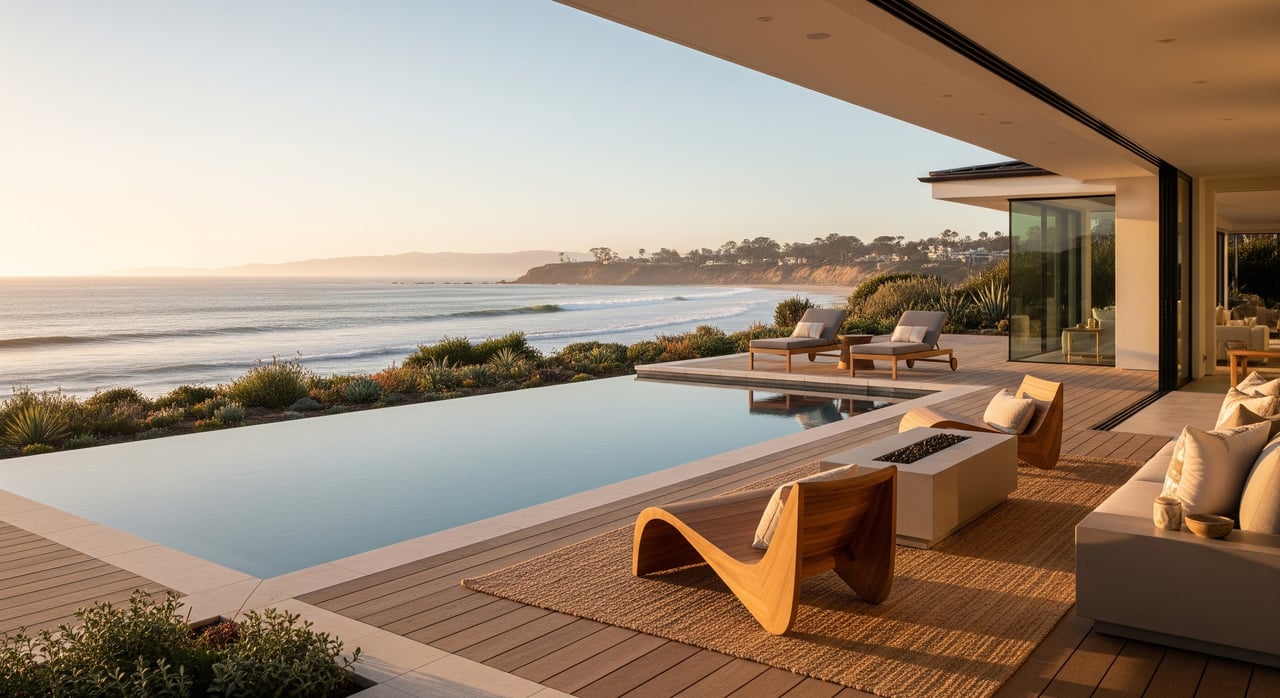
Is that blue horizon outside your window priceless or just a nice bonus? If you are buying or selling in Carpinteria, the value of an ocean view can feel elusive. You want clarity before you make a big move. In this guide, you will learn a simple, local framework to price views with confidence, how to use comps the right way, and what to check so your view is protected long term. Let’s dive in.
What drives ocean view value
Strong ocean views in Carpinteria tend to command a premium because supply is limited and the coastline is tightly regulated. To estimate that premium, separate the view itself from everything else, then rate the view on a few core factors.
Orientation and breadth
- Full, frontal exposure is worth more than an angled or peek view.
- The wider the sightline across coastline and horizon, the higher the perceived value.
- Note what you see in each layer: foreground beach, midground coastline or pier, and background horizon or islands on clear days.
Elevation and panorama
- Beach level offers intimacy and direct connection to the sand.
- Bluff or mid-elevation often unlocks dramatic, unobstructed panoramas that feel bigger and more permanent.
- Foothill heights can reveal sweeping coastline and island views that appeal to buyers who prize a broad panorama over immediate sand access.
Distance to sand and access
- Direct beachfront access is a separate amenity from the view itself and should be valued on its own.
- Beach-block or short-walk locations usually carry a premium compared to several blocks inland.
- Deeded or private access points add utility and can lift demand.
Protection and permanence
- Recorded view easements, low-height zoning next door, or adjacent public land reduce the risk of future obstructions.
- Neighborhood scale, lot patterns, and conservation areas can offer informal protection.
- If protection is unclear, buyers discount for uncertainty.
Exposure and nuisances
- Salt spray, wind, and storm conditions increase maintenance at lower elevations.
- Noise factors such as highway proximity or beach activity can affect enjoyment.
- A great view rarely erases persistent nuisances for most buyers.
Insurance, hazards, and carrying costs
- Flood zones, tsunami and erosion exposure, and sea-level rise planning influence insurability and long-term risk.
- Lenders and insurers may apply stricter terms on low-elevation parcels, which can narrow the buyer pool.
- Factor premiums and coverage limits into your valuation.
How to price the view premium
The goal is to isolate the value of the view from the home’s other features. Use a tight, repeatable process so your number is defendable.
Start with the tightest comps
- Begin on the same street or block when possible, focusing on the past 6 to 12 months.
- Keep architecture, square footage, lot size, and condition as similar as possible.
- If inventory is thin, expand the radius carefully and note each difference you accept.
Use the pairing method
- Identify two nearly identical sales where the main difference is view quality.
- Adjust for measurable differences such as a deck, recent kitchen remodel, or parking.
- The remaining price gap is your view premium for that specific orientation and elevation.
Apply consistent adjustments
Use a checklist so you do not over- or under-weight the view.
- View orientation: frontal, corner-frontal, peek
- Elevation: beach level, bluff, mid-elevation, foothill
- Distance to sand: beachfront, beach-block, short walk, several blocks
- Privacy and obstructions: permanent or transient
- Legal protections: recorded easements, height limits, public land
- Access and parking: deeded beach access, garage or driveway
- Hazards and insurance: flood zone, tsunami, erosion history
- Functional differences: square footage, beds and baths, lot size, condition, permitted ADUs
Score the view in the field
- Create a simple scorecard from 1 to 10 for breadth, obstruction risk, and elevation impact.
- Apply the same scoring across every property you tour to anchor adjustments.
- Recheck at different times of day to catch glare, marine layer, or sunset angles.
Carpinteria comp patterns to know
Local context matters. Different view profiles attract different buyers, so compare like with like whenever possible.
Padaro Lane and the beachfront corridor
- Beachfront and bluff-adjacent lots often combine an intimate shoreline view with direct sand access.
- Premiums reflect scarcity, small-scale neighborhood character, and a walkable coastal lifestyle.
- Lower elevation increases exposure to wave action and future sea-level impacts, which can affect insurance and maintenance.
- Comp strategy: compare beachfront to beachfront. If you must cross-compare inland, separate the access premium from the view premium.
Foothill and hilltop view streets east of 101
- Higher elevation can deliver wide panoramas that include coastline, horizon, and islands on clear days.
- Lots are often larger, and immediate coastal hazard exposure tends to be lower than at beach level.
- Road access and longer walks to the beach can shift priorities for buyers who want quick sand access.
- Comp strategy: compare foothill to foothill. Do not assume a beachfront premium equals a foothill panorama premium.
Cross-neighborhood examples
- Two similar homes on the same block where one faces the ocean and one faces inland will reveal a clear, street-level view premium after basic adjustments.
- A Padaro beachfront property with private access is not directly comparable to a panoramic foothill home. When you must compare, explicitly adjust for access, elevation, and hazard costs.
Buyer due diligence for ocean-view homes
Getting the view is one thing. Keeping and insuring it is another. Complete these steps before you commit.
Verify hazards and insurance
- Check FEMA flood maps, tsunami and shoreline hazard references, and local sea-level rise planning.
- Request quotes early for flood and related coverage if applicable.
- Ask about historical erosion, drainage patterns, and past storm repairs.
Confirm view protections
- Review title for recorded view easements or covenants.
- Research zoning next door for height limits and potential development.
- Confirm whether nearby land is public or conservation, which reduces future blockage risk.
Test the view in real life
- Visit at multiple times: morning, afternoon, sunset, and after dark.
- Note glare, wind, marine layer, and night lighting.
- Ask about neighboring trees and any trimming agreements.
Beach access and parking
- Verify legal access versus informal paths.
- Understand parking rules for you and your guests.
- Confirm maintenance responsibilities for private access structures if they exist.
Seller strategy to capture the view premium
Buyers pay more for views that feel big, protected, and easy to enjoy. Your pricing and prep should make that story obvious.
Document permanence
- Gather records on easements, adjacent zoning, and public or protected land.
- Summarize hazard information and any mitigation or improvements you have completed.
- Make these details available during showings and in disclosures.
Prep and presentation that sells the view
- Clear and frame sightlines with smart landscaping and window care.
- Consider modest upgrades like glass railings or a refreshed deck that invite time outside.
- Stage seating toward the best angles and add simple view markers for sunset and island sightlines.
Price with clarity
- Build comps that isolate the view premium by orientation and elevation, not just proximity to the beach.
- Separate the beach access premium from the view premium in your internal analysis.
- Be ready to show paired sales and your adjustment logic.
Anticipate buyer questions
- Prepare answers on potential future obstructions and insurance availability.
- Provide recent insurance quotes or contacts.
- Explain maintenance routines related to salt, wind, and storms.
Common negotiation drivers
- Scarcity of ocean-view inventory during peak seasons can increase competition.
- Buyers often trade price for clarity on permanence and insurance. The more certainty you provide, the stronger your position.
- Credits or timing concessions can bridge gaps tied to maintenance or hazard concerns.
Next steps
Ocean-view value in Carpinteria is not a one-size number. It is a clear process that blends orientation, elevation, access, protection, and risk into a premium that buyers understand and appraisers respect. If you want a careful comp set, paired-sale analysis, and a plan to either secure or showcase your view, let’s connect. Andrea O'Loughlin offers a boutique, high-touch advisory experience backed by franchise reach. Schedule a 15-minute consultation.
FAQs
How do I estimate the value of an ocean view in Carpinteria?
- Start with tight comps on the same block, use paired sales to isolate the view, then adjust for orientation, elevation, access, protections, hazards, and condition.
What is the difference between beachfront access and an ocean view premium?
- Beachfront access is a separate amenity with its own premium. Value the view and the access independently, then combine them in your pricing.
Are bluff-top views more valuable than beach-level views in Carpinteria?
- Often, bluff-top views feel more expansive and less prone to future obstructions, while beach-level homes trade on intimacy and access. Compare like with like when valuing.
How do I know if my ocean view is protected long term?
- Check for recorded view easements, review adjacent zoning and height limits, and note public or conserved land nearby that reduces blockage risk.
What insurance issues should I check for ocean-view or beachfront homes?
- Confirm flood zone status, tsunami and erosion exposure, and availability and cost of coverage. Get quotes early and factor premiums into your decision.
How should sellers prepare their ocean-view home for market?
- Document view protections, address simple sightline improvements, and price using recent paired comps. Be ready with insurance information and hazard disclosures.