Wondering whether Montecito’s “beach,” “village,” and “foothills” labels actually mean something when you start looking at homes? They do, but not as strict neighborhood lines. If you are buying or selling in 93108, understanding these micro-areas can help you match your goals to the right setting, price band, and daily rhythm. Let’s break down how Montecito’s shoreline-to-hillside gradient really works.
Why Montecito feels different block by block
Montecito is an unincorporated Santa Barbara County planning area, and the county organizes it into Coastal, Central Urban, and Mountain sub-areas. In everyday conversation, many people simplify that into beach, village, and foothills.
That shorthand is useful, but it is not an official map. In Montecito, labels often blur at the edges, which means a home’s street, elevation, lot size, privacy, and access can matter just as much as the area name.
The county’s planning framework also helps explain why Montecito feels so distinct. The Montecito Board of Architectural Review is charged with preserving semi-rural character, view corridors, privacy, landscaping, and neighborhood compatibility, which shapes the feel of each setting.
Beach areas: access and coastal lifestyle
If your priority is being close to the sand, the beach zone is the clearest fit. This part of Montecito is tied most directly to the water, with housing that includes cottages, duplexes, condominiums, clustered developments, and an exclusive residential strip immediately above or on the beach.
This is also the part of Montecito where a walk-to-the-water lifestyle feels most tangible. Santa Barbara County identifies public access points and easements at Eucalyptus Lane, Posilipo Lane, Hammond’s Meadow, and Butterfly Beach, and notes that these beach areas are popular for walking, jogging, picnicking, sunbathing, swimming, and surfing.
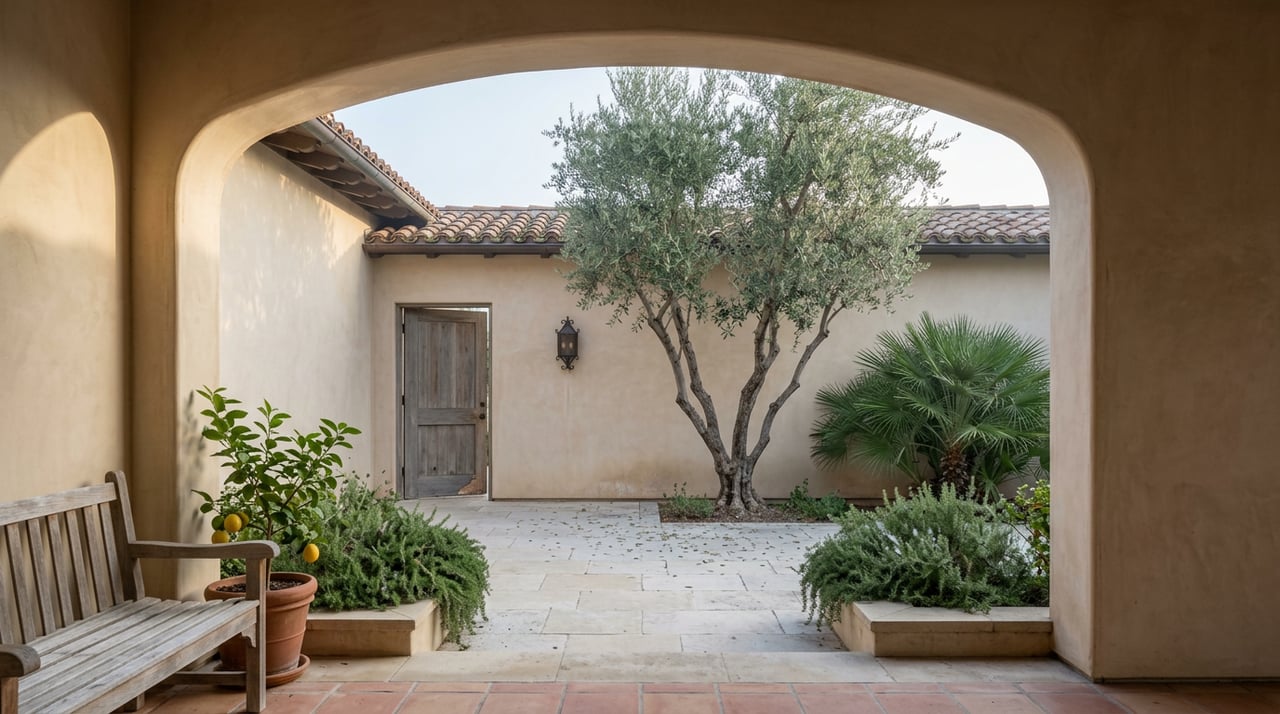
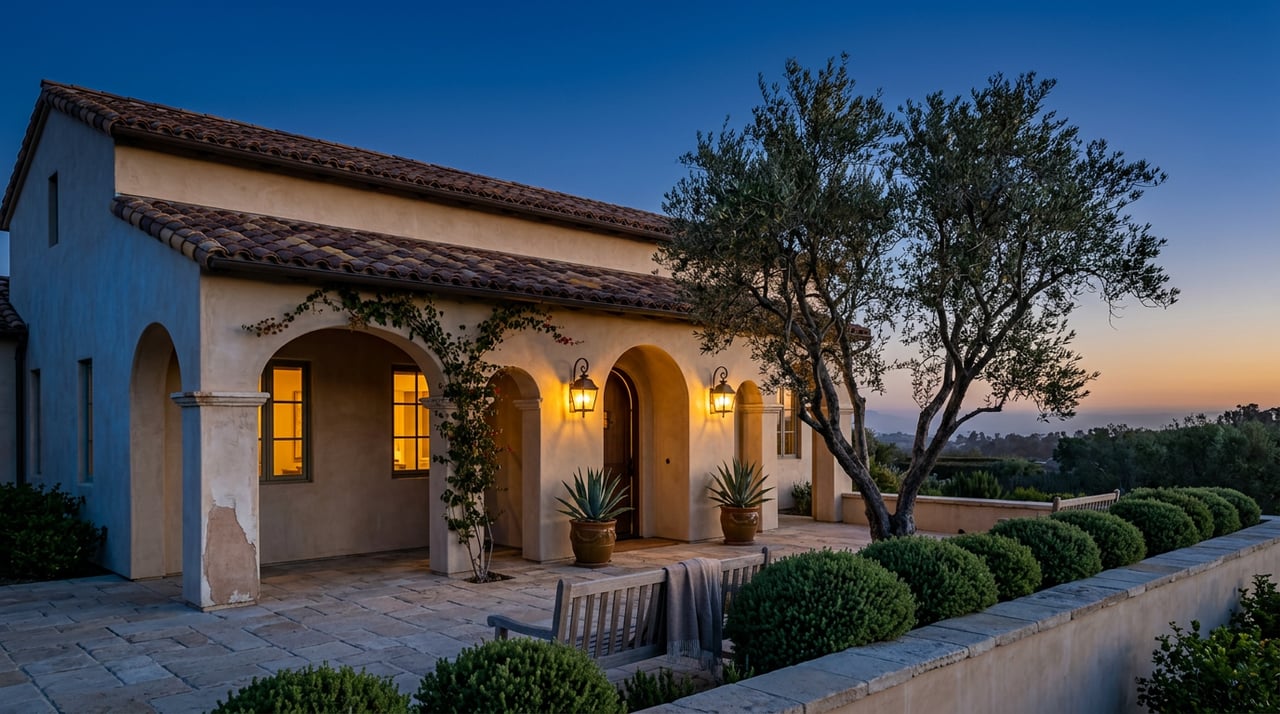
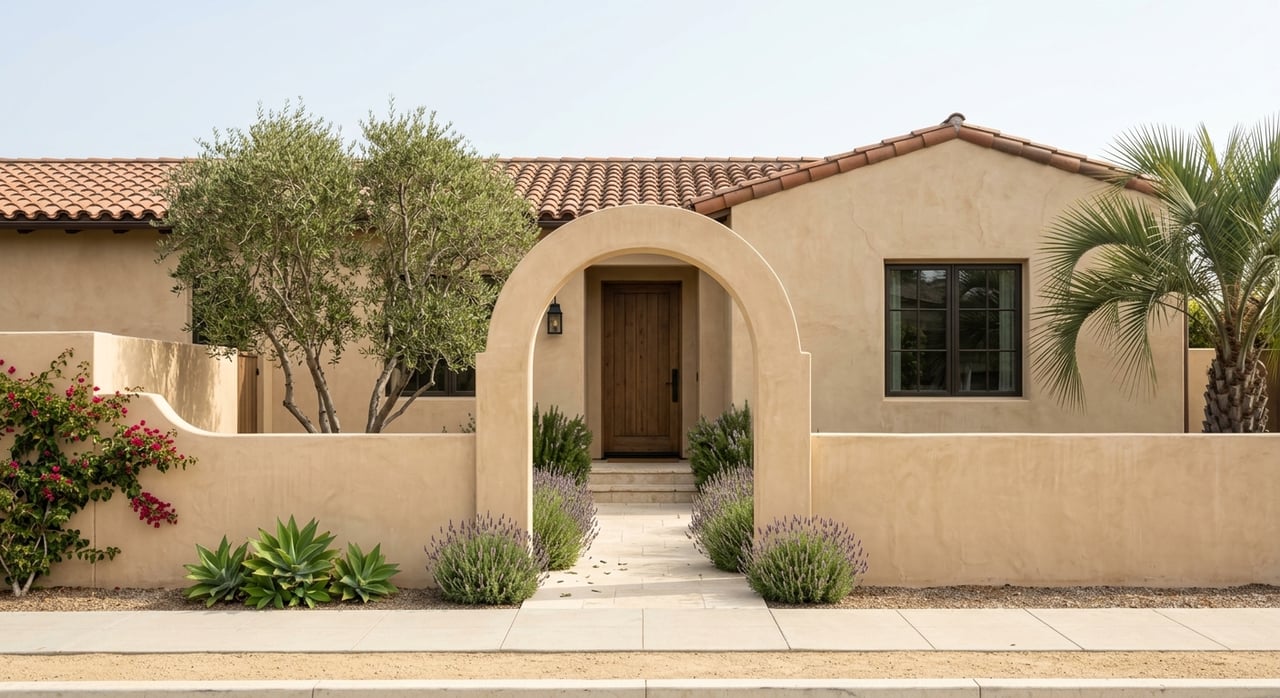
From an architectural standpoint, beach-adjacent homes often have a more compact scale than the larger estate zones farther inland. Even so, the presentation can still feel highly polished, often blending coastal ease with Santa Barbara’s Spanish and Mediterranean design vocabulary.
What daily life feels like near the beach
In practical terms, the beach zone tends to suit buyers who value immediacy and outdoor access. You may be able to step out for a beach walk, enjoy the coastal setting more directly, and live closer to the shoreline than in other parts of Montecito.
That convenience comes with meaningful variation from street to street. A home with direct beach proximity, a gated setting, or a particularly strong lot can occupy a very different pricing tier from another property just a short distance away.
Beach pricing tends to move fast
Recent examples suggest the beach zone is expensive, but not uniform. Seaview sales have clustered around the mid-$3 million to low-$4 million range, while a Butterfly Lane property was listed at $7.45 million after starting at $8.295 million.
A useful takeaway is that the beach market often spans from premium coastal luxury to a much higher tier very quickly. In this setting, direct access, frontage, privacy, and lot quality can influence value in a major way.
Village areas: convenience and a layered mix
If you want Montecito’s most practical location for errands, dining, and everyday movement, the village zone usually stands out. The Central Urban sub-area remains semi-rural by county description, but it also includes the Village area, which the county identifies as Montecito’s only commercial center and primary commercial core.
This is where Montecito often feels most connected in day-to-day life. Montecito Village emphasizes Mediterranean-style buildings, red tile roofs, and easy parking, while nearby Coast Village Road adds restaurants, banks, grocery stores, offices, gas stations, and specialty services.
One important nuance matters here. Coast Village Road functions as Montecito’s adjacent retail corridor, but it is technically within Santa Barbara city limits rather than the county planning area itself.
Why the village feels more varied
The village zone tends to feel more layered than the beach or foothills. The county describes this area as a place where large lots and homes sit alongside neighborhoods of small lots and cottages, which helps explain the mix of scale and style you see.
For buyers, that means more variety in housing type and price point. For sellers, it means your immediate location, home type, and access to commercial conveniences can strongly shape how your property is positioned.
Village pricing covers a wide range
Recent pricing in the village-related areas shows just how broad the spread can be. Coast Village posted a recent median sale price of $4.3 million, but the same period also included a $1.75 million condo sale and a $5.4 million home sale.
Upper Village reads differently. There, the recent median sale price was $11.36 million, with current examples ranging from a $9.45 million Riven Rock listing to a $21.95 million estate on East Mountain Drive.
That gap is a reminder that “village” is not one thing. Lower village and upper village can deliver very different experiences, values, and buyer pools.
Foothills areas: privacy, land, and views
As you move higher, Montecito shifts into its least urbanized setting. The Mountain sub-area begins above the central core and runs toward East Camino Cielo, where the county describes mountainous terrain, average slopes over 40 percent, vast open space, limited public road access and public services, and extreme fire hazard.
For many buyers, the appeal of the foothills is simple. You trade convenience for privacy, separation, larger land patterns, and elevated outlooks.
This is generally the least walkable part of Montecito. Daily routines depend more on driving, and the physical setting plays a larger role in how a property feels than proximity to shops or the beach.
What the foothills look like
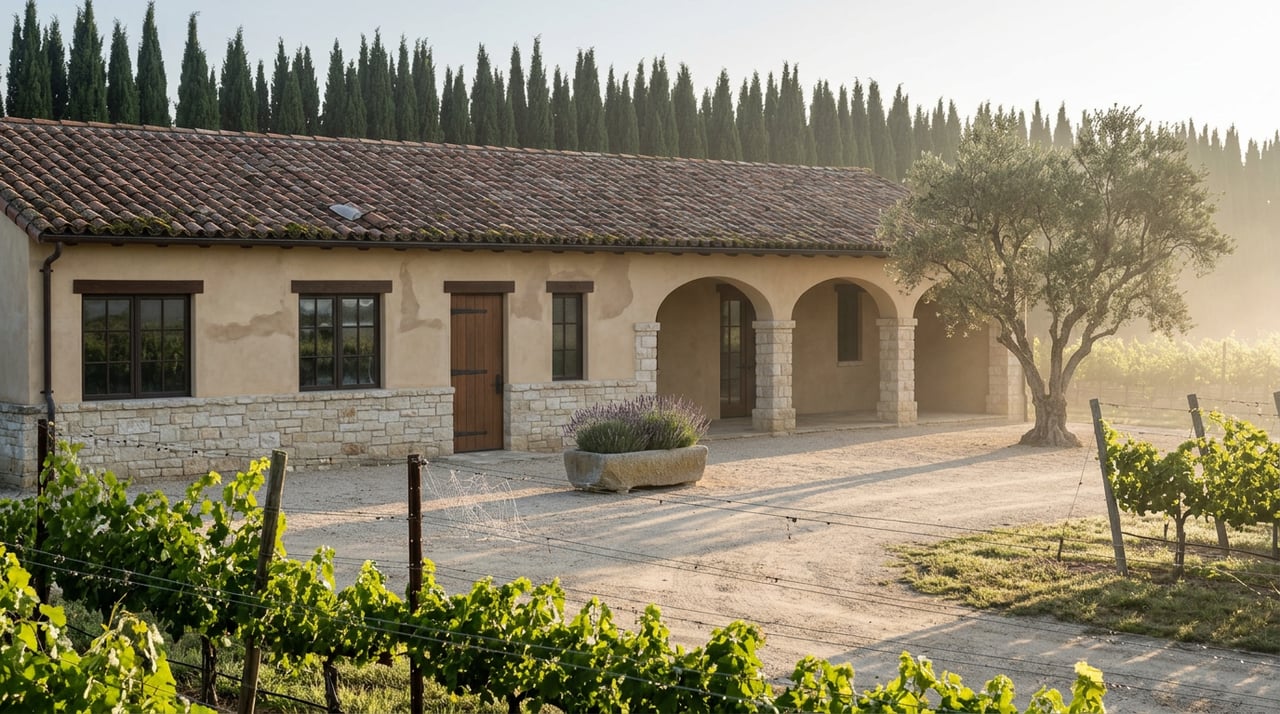
Unlike the village core, the foothills are not defined by one main architectural style. Current examples include a traditional-style residence in Riven Rock on 1.1 acres and a gated Tudor on Eucalyptus Hill with mountain views, orchards, and a private well.
The common thread is usually the setting rather than the façade. Think acreage, gates, long drives, mature trees, and broader outlooks.
Foothill pricing rises with privacy
The foothills can start in the mid-$4 million range for smaller hillside homes, then rise quickly into eight figures when a property offers exceptional views, acreage, or privacy. Recent examples include a $4.495 million Eucalyptus Hill property, a $9.45 million Riven Rock listing, and a $21.95 million Upper Village view estate.
That spread highlights a core truth about Montecito. As elevation, lot size, and privacy increase, value often follows.
The overlap matters as much as the label
One of the biggest mistakes buyers and sellers can make is treating these three micro-areas as fixed boxes. In reality, overlap is normal.
Butterfly Lane can read as beach-plus-village. Coast Village can feel village-plus-coast. Eucalyptus Hill and Riven Rock often read village-plus-foothills.
That is why the best way to understand Montecito is through three lifestyle settings, not three rigid neighborhoods. Beach is about direct coastal access, village is about convenience and social centrality, and foothills are about privacy, views, and land.
How to choose the right Montecito setting
If you are comparing homes across Montecito, it helps to start with how you want to live rather than with a label alone. Ask yourself which tradeoff matters most to you.
- Choose beach if direct access to the shoreline and a coastal daily rhythm matter most.
- Choose village if errands, dining, and a more connected day-to-day setting are your priority.
- Choose foothills if privacy, larger lots, and elevated views are worth more to you than convenience.
For sellers, the same framework is useful. A home’s strongest story often comes from the lifestyle it offers, whether that is walkability to the sand, practical access to services, or a more secluded hillside setting.
Montecito’s premium position on the South Coast
All three settings sit inside one of the South Coast’s most expensive submarkets. Santa Barbara County association data showed Montecito with a March 2026 median sale price of $5.4 million, compared with $2.23 million in Santa Barbara and $1.52 million in Goleta.
The county association’s December 2025 year-end chart placed Montecito at $6.19 million versus $2.30 million in Santa Barbara, and a May 2026 Redfin city snapshot showed a $5.7 million median sale price. The exact number moves over time, but the pattern stays clear: Montecito commands a significant premium.
That is part of why micro-area understanding matters so much here. In a market with this level of value, small differences in location and setting can have an outsized effect on pricing, demand, and long-term fit.
If you are thinking about buying or selling in Montecito, it helps to look beyond the headline area name and focus on the details that actually drive value. Andrea O'Loughlin offers the kind of local guidance that helps you evaluate each street, setting, and opportunity with more clarity.
FAQs
What do beach, village, and foothills mean in Montecito?
- They are practical lifestyle labels for Montecito’s coastal, central, and hillside settings, not strict official neighborhood boundaries.
Which Montecito area is most walkable for daily errands?
- The village area is generally the most practical for errands and casual dining because it is closest to Montecito’s main commercial core and the Coast Village corridor.
Which Montecito area is closest to the sand?
- The beach area is the clearest fit if your priority is direct coastal access and proximity to public beach access points.
Which Montecito area offers the most privacy?
- The foothills usually offer the most privacy because they tend to include larger lots, more separation, and a less urbanized setting.
Are Montecito home prices similar across all micro-areas?
- No. Recent examples show broad variation, with beach-adjacent homes often in the mid-$3 million to $7 million-plus range, village areas spanning from condo-level entry points to luxury estates, and upper village or foothill properties often reaching $9 million to $20 million-plus.
Does Coast Village Road count as Montecito?
- It functions as Montecito’s adjacent retail corridor, but it is technically within Santa Barbara city limits.